
The project claims more than 1.3 lakh sq. ft. of amenity coverage across four zones.
That claim matters because it explains why Altus feels different from projects that rely on one club building and a few open courts. Here, the amenity plan is part of the premium architecture story. If you are paying for a skyscraper lifestyle, the expectation is that height changes how shared spaces are used. Hallmark Altus is clearly leaning into that logic. In the same Hyderabad context, Namishree Vrindavan helps buyers read clubhouse, landscape, sports, and wellness features through everyday use rather than brochure quantity.
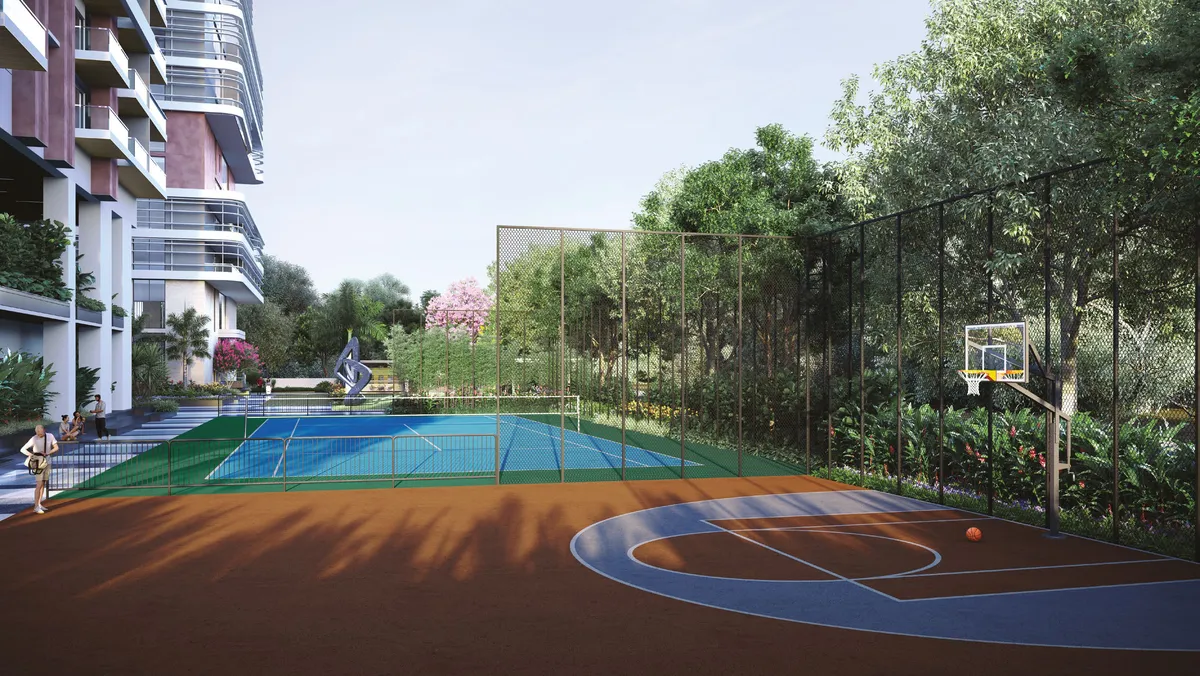
The podium is where active family life is concentrated.
Podium planning matters a lot in vertical projects because it determines whether the daily resident experience feels rich or merely dense. At Hallmark Altus, the podium includes jogging paths, tennis, basketball, cricket nets, skating, pickle ball, party lawns, open-air fitness, children's play, and daycare support. That makes it the most important day-to-day family-use zone in the project.
For end-users, this means the outdoor layer is not decorative. It is practical. Parents, children, and residents who prefer active routines get a meaningful amount of usable space before even stepping into the clubhouse.
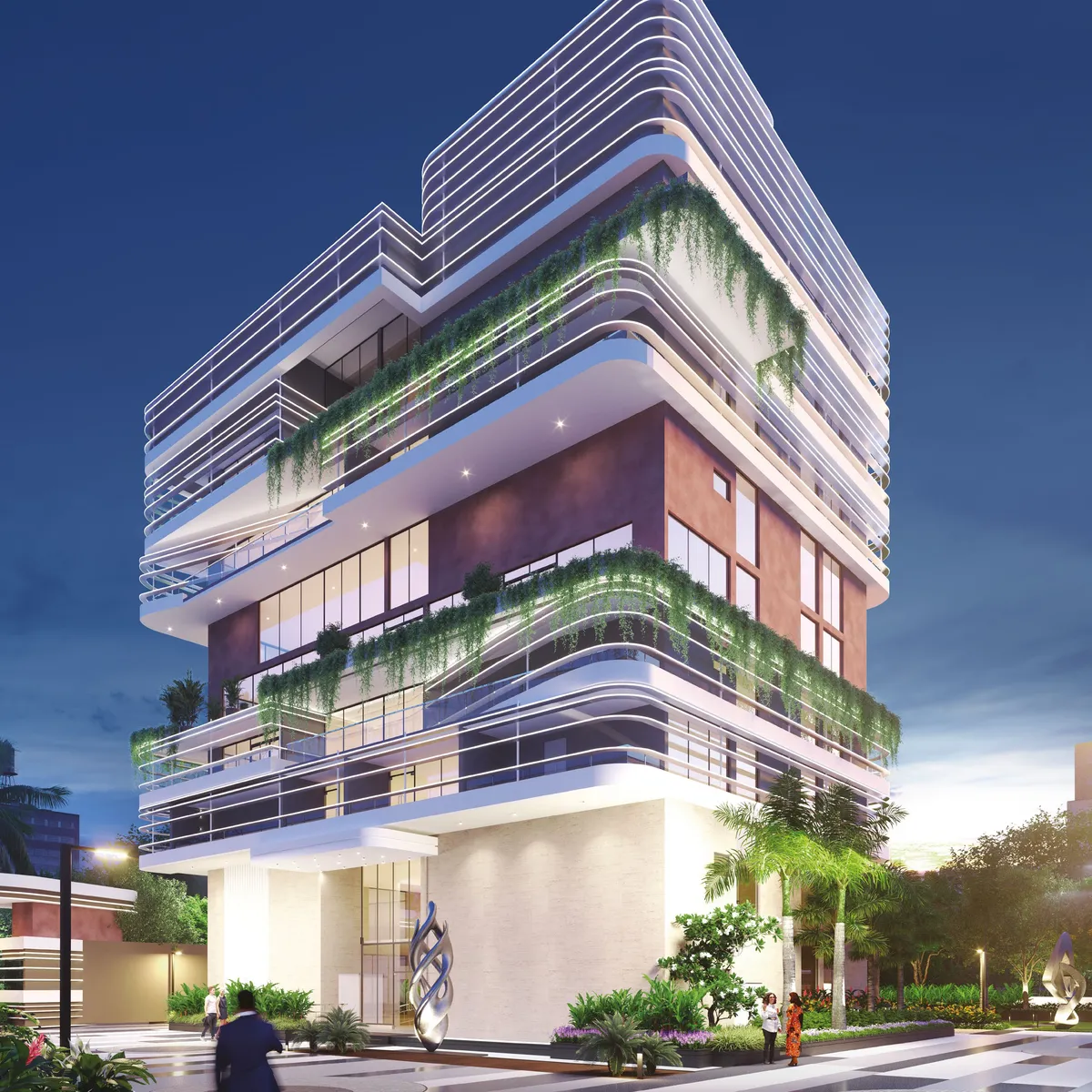
The 10-floor clubhouse is one of the project's clearest premium differentiators.
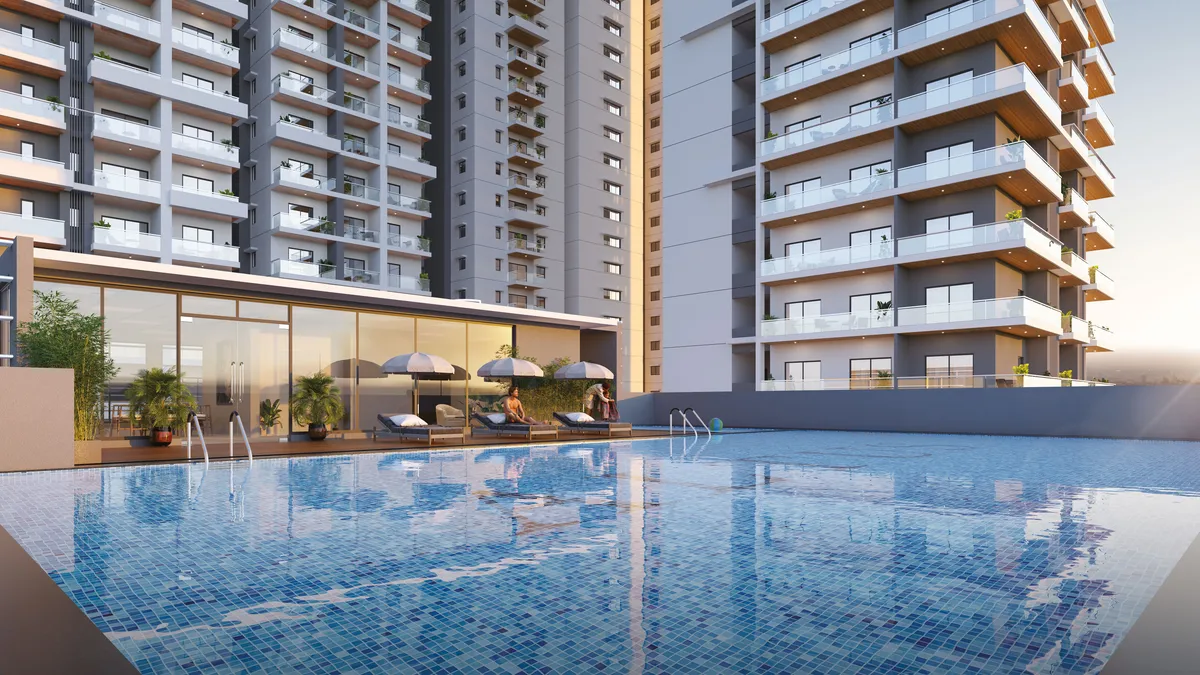
Indoor sports, spa, gym, swimming pool, guest rooms, preview theatre, meeting spaces, cafe, karaoke, music room, and co-working spaces all sit inside the clubhouse stack. This matters because it changes the nature of the project from a simple residential tower to a more self-contained lifestyle address.
Buyers who host friends, need occasional guest accommodation, or want a more complete work-from-home support layer will find this clubhouse mix more compelling than a typical gym-pool-party hall trio.
Altus uses height as a leisure asset, not only as a residential one.
The sky zone includes mini golf, yoga, aerobics, rooftop theatre, sky bar, barbecue space, and party lawns. These are exactly the kinds of amenities that make sense in a premium high-rise because they turn elevation into experience instead of leaving the upper levels as pure technical space.
For buyers choosing Hallmark Altus partly because it is a skyscraper-format project, this sky program helps justify that decision more convincingly than a conventional club setup would.
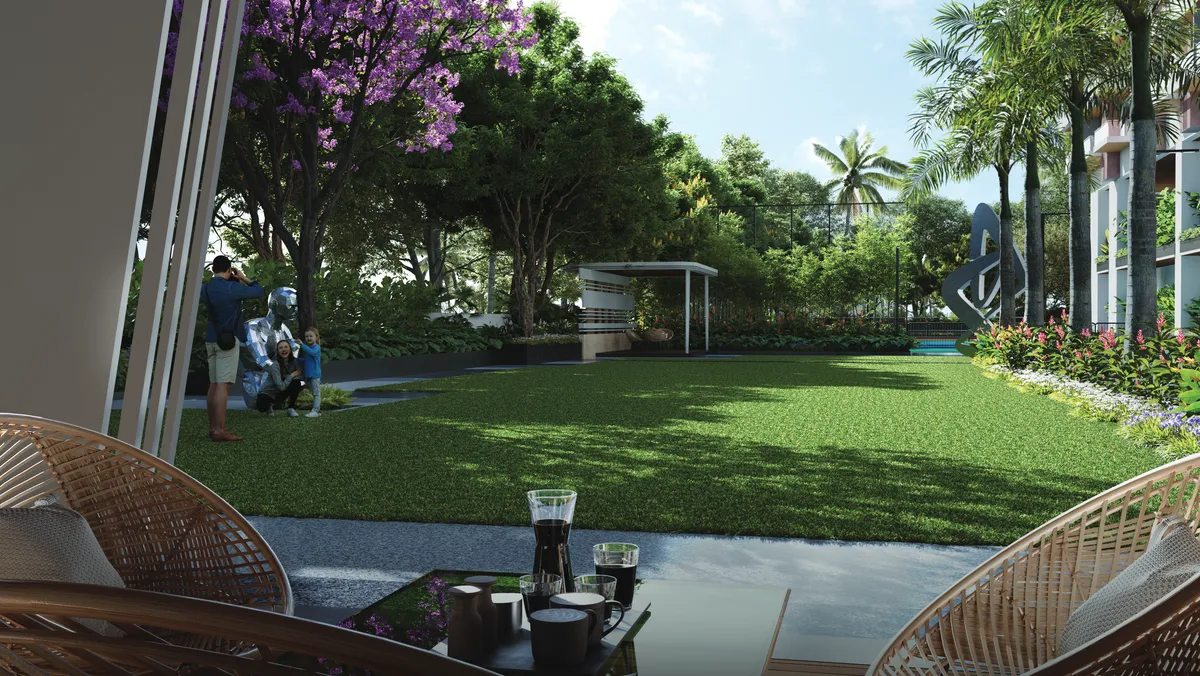
The environment deck and utility features matter as much as the flashier amenities.
Biophilic gardens, reading nooks, chess corners, and quieter work-friendly spaces help the project serve residents who do not want every common area to feel like an event zone. These spaces are especially useful in large communities because they add choice and lower the pressure on the more active zones.
On the utility side, RFID vehicle management, EV charging support, 100 percent DG backup, piped gas, STP reuse, rainwater harvesting, and solar fencing round out the infrastructure stack. These do not generate brochure drama, but they matter a lot to daily ownership quality.
The amenity program is especially strong for large families, hybrid workers, and entertaining households.
Families with children
They get the broadest benefit from the podium courts, play areas, daycare support, and open lawns.
Hybrid-working professionals
Co-working zones, meeting rooms, wellness rooms, and the western office corridor location create a strong fit.
Social households
Guest rooms, rooftop theatre, barbecue space, party lawns, and club social spaces make the project easier to enjoy beyond the apartment door.
Amenities should always be read together with the master plan and the premium price band explained on pricing.
Metro, malls, and another amenity-heavy guide.
Layer these sources with reviews for trade-offs.
Now connect the lifestyle story with the location and your budget.
Continue to location if commute and school access matter most, or move back to pricing if you are deciding whether the amenity stack justifies the premium. Check whether the amenities match the likely resident profile and whether they improve daily routines beyond launch-stage appeal.
Hallmark Altus Amenities FAQs
What amenities are planned at Hallmark Altus?
Hallmark Altus claims more than 1.3 lakh sq. ft. of amenity coverage across four zones - a 50,000 sq. ft. podium, a 50,800 sq. ft. 10-floor clubhouse, a 20,000 sq. ft. sky terrace program, and a 10,000 sq. ft. environment deck. The set includes clubhouse, swimming pool, parking, and party hall among many other features.
What sits inside the Hallmark Altus podium?
The podium concentrates the active program - tennis, basketball, cricket nets, pickle ball, skating, open-air fitness, children's play areas, daycare support, and gathering lawns. It is designed to handle most of the day-to-day family routines on a single connected level.
What does the 10-floor clubhouse at Hallmark Altus offer?
The 50,800 sq. ft. clubhouse stacks badminton, squash, spa, gym, pool, preview theatre, music room, cafe, conference rooms, guest suites, and social indoor recreation across 10 floors. It functions as the project's primary social anchor.
What sky-terrace amenities does Hallmark Altus include?
The sky terrace program covers rooftop theatre, sky bar, barbecue deck, yoga zone, and mini golf. These elevated leisure spaces support the project's high-rise identity and give residents recreation at altitude rather than only at ground level.
Are EV charging and piped gas part of Hallmark Altus?
Yes. The infrastructure stack lists EV charging support, a centralized gas system with individual meters to kitchens, 100 percent DG backup, RFID vehicle management, high-speed lifts, rainwater harvesting, STP reuse, and solar fencing.
Which households benefit most from the Hallmark Altus amenity stack?
The amenity program is strongest for large families, hybrid-working professionals, and entertaining households. Families get podium sports and kids' play, hybrid workers use the co-working and meeting rooms, and social households can lean on the rooftop theatre, party lawns, and guest suites.